ServicesRoof Inspections
Roof Inspections in Beech Grove
A ceiling stain rarely sits right under the hole that caused it. Our roof inspection follows the water, wind or wear back to its source, from shingles and flashing down to the attic decking, so any repair you pay for fixes the actual problem.
What a Real Roof Inspection Covers
Most roof problems show up somewhere other than where they start. Water can enter at a cracked pipe boot, run along the top of the decking and drip through the ceiling ten feet away. A shingle that looks fine from the driveway can have a broken seal strip that lets wind lift it every storm. We inspect the whole system, not just the spot you noticed, because a patch over the symptom usually fails again.
An inspection is the right first step when you see a leak or stain, after a hard wind or hail storm, when your roof is getting old, or when you are buying or selling a home. You get a clear account of what we found, what caused it and what it will take to fix, before anyone talks about repair or replacement.
What We Check, Piece by Piece
- Shingle surface and seal strips
- We look for granule loss, cracking, curled tabs and shingles whose adhesive strip has let go. Bare spots expose the asphalt to UV, which speeds up aging, and unsealed tabs are the first to blow off.
- Flashing and roof penetrations
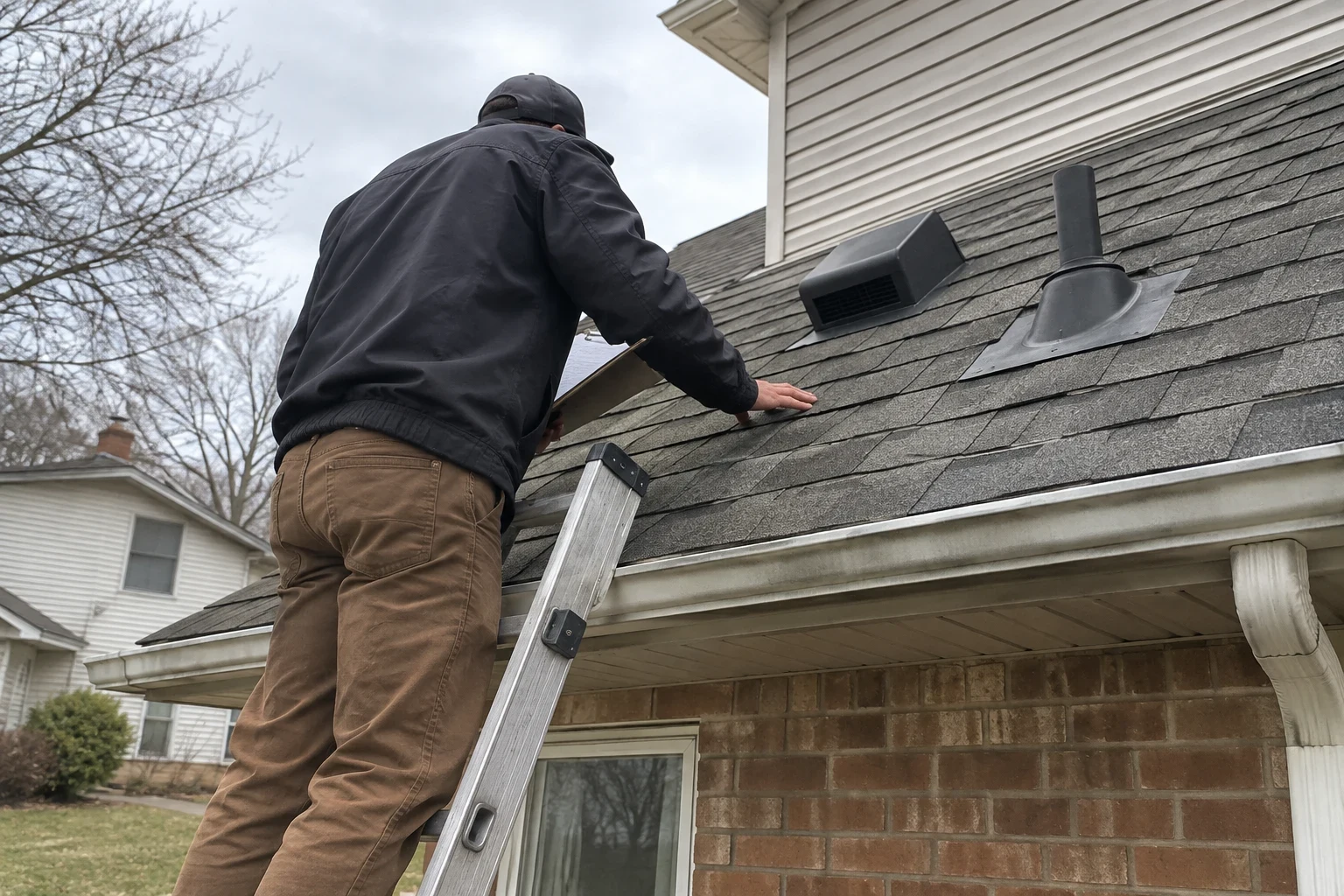
- Chimney step flashing, counterflashing, wall flashing, vent stacks and pipe boots are where most leaks begin. The neoprene collar on a pipe boot often cracks from sun exposure years before the shingles around it wear out.
- Valleys, eaves and drip edge
- Valleys carry the most water on the roof, and eaves take the brunt of ice buildup. We check for worn valley shingles, missing drip edge and signs that water has been backing up under the first courses.
- Attic, decking and ventilation
- From inside the attic we look for daylight, damp or darkened sheathing, rusted nail tips and blocked soffit or ridge vents. Poor airflow traps heat and moisture, which shortens shingle life and feeds frost and mold in cold months.
- Gutters and drainage
- Overflowing or pitched-wrong gutters send water behind the fascia and down the wall. Granules collecting in the troughs also tell us how fast the shingles are wearing.
- Photos and written findings
- You get photos of each issue, where it is and what we believe caused it. If something needs work, we explain whether it is a repair or a replacement and why.
Signs It Is Time for an Inspection
A stain or drip indoors
Brown rings on a ceiling or wet insulation mean water has been getting in for a while. Finding the entry point matters more than finding the stain.
Granules in the gutters
A handful of gritty granules at the downspout after a rain means the shingles are shedding their protective layer.
Lifted or missing shingles after wind
Even one missing tab exposes the underlayment. Nearby shingles that flapped in the same gust may have lost their seal too.
Ice dams and long icicles
Heavy ice along the eaves through an Indiana winter usually points to warm air escaping into the attic. That melts snow higher up, and the water refreezes at the cold edge and backs under the shingles.
A roof past 15 years or a home sale
Older asphalt roofs can look intact while the seals and flashing are failing. Buyers and sellers both benefit from knowing the real condition before closing.
What Moves the Cost After the Inspection
You pay nothing for the inspection itself. The cost of any work afterward depends on what we find, and every item goes on a written line-item estimate before work starts, so the final bill matches what you agreed to. If the job ends up bigger than you budgeted for, we offer financing.
Root cause versus symptom
A cracked pipe boot is a small repair. Water that has run along the decking for months may mean replacing rotted sheathing as well.
Condition of the decking
Soft or delaminated plywood under the shingles has to be replaced before new material goes on, and we only know its extent once we look from the attic or open the area.
Pitch, height and access
A steep slope or an eave two stories up takes more time to work on, because the crew has to rig roof anchors, harness lines and ladder stabilizers before any material comes off.
Insurance involvement
If storm damage is covered, your claim can change who pays for what. We work with homeowners and insurance companies on storm damage claims.
How Inspection Day Works
- 1
You call, we set a time
Tell us what you have noticed and where. We pick a visit time that fits your schedule. The only thing that helps on our end is being able to reach the attic hatch, so moving a few boxes out of a closet is usually all it takes.
- 2
Exterior and roof walk
We walk the roof where the pitch allows it safely and check every slope, penetration and edge. On steep or fragile sections we inspect from a ladder and photograph up close.
- 3
Attic check
Inside, we trace any moisture back toward its source and compare it with what we saw outside. This is often where the true cause becomes clear.
- 4
Findings walk-through
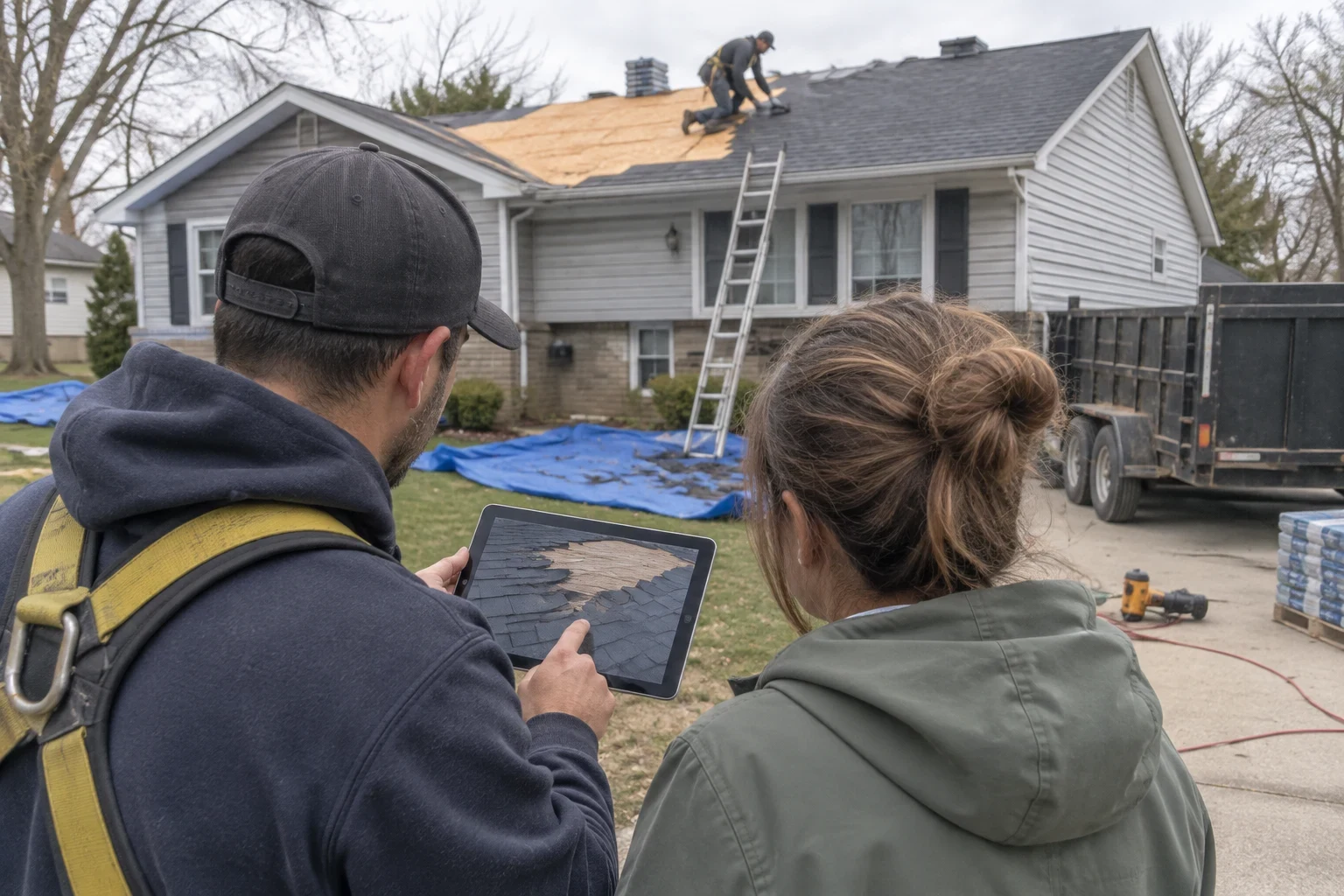
Before we leave, we review each photo with you at the kitchen table or on the driveway. We point out the problem, the cause behind it, and which items are urgent versus which can be watched. When work is called for, a written line-item estimate follows.
Roof Inspection Questions
How much of my day will the inspection take?
Plan on roughly an hour for a typical home. A roof with several valleys, dormers or a steep pitch takes longer, and so does an attic reached through a tight closet hatch. We set aside enough time to check every slope rather than rushing through it.
Do you really need to go in my attic?
Yes, whenever there is access. Many leaks and ventilation problems only show from underneath, like damp sheathing, daylight around a vent or frost on nail tips. Skipping the attic is how symptoms get patched while the cause stays.
Will you just tell me I need a new roof?
No. Plenty of roofs only need a targeted repair, and when that is the case it is what we recommend. We show you photos of what we found and explain our reasoning either way, so you can see why we suggest a repair or a replacement.
Can an inspection help with a storm damage claim?
It can. We document hail bruising, wind-lifted shingles and damaged flashing with dated photos, which gives you a clear record before you file. We work with homeowners and insurance companies on storm damage claims, though your adjuster makes the coverage decision.
Is a yearly check worth it if nothing is leaking?
It usually is. A visit every twelve months, plus one after any storm with hail or strong wind, catches problems while they are still small. Winter freeze-thaw cycles slowly open up flashing seams and sealant joints, and a spring look finds those gaps before water does.
Find Out What Your Roof Actually Needs
One visit gives you the cause, the photos and a straight answer on what to do next. We inspect roofs across Beech Grove, Indianapolis, Greenwood and nearby towns.