ServicesStorm Damage Repair
Storm Damage Repair in Beech Grove
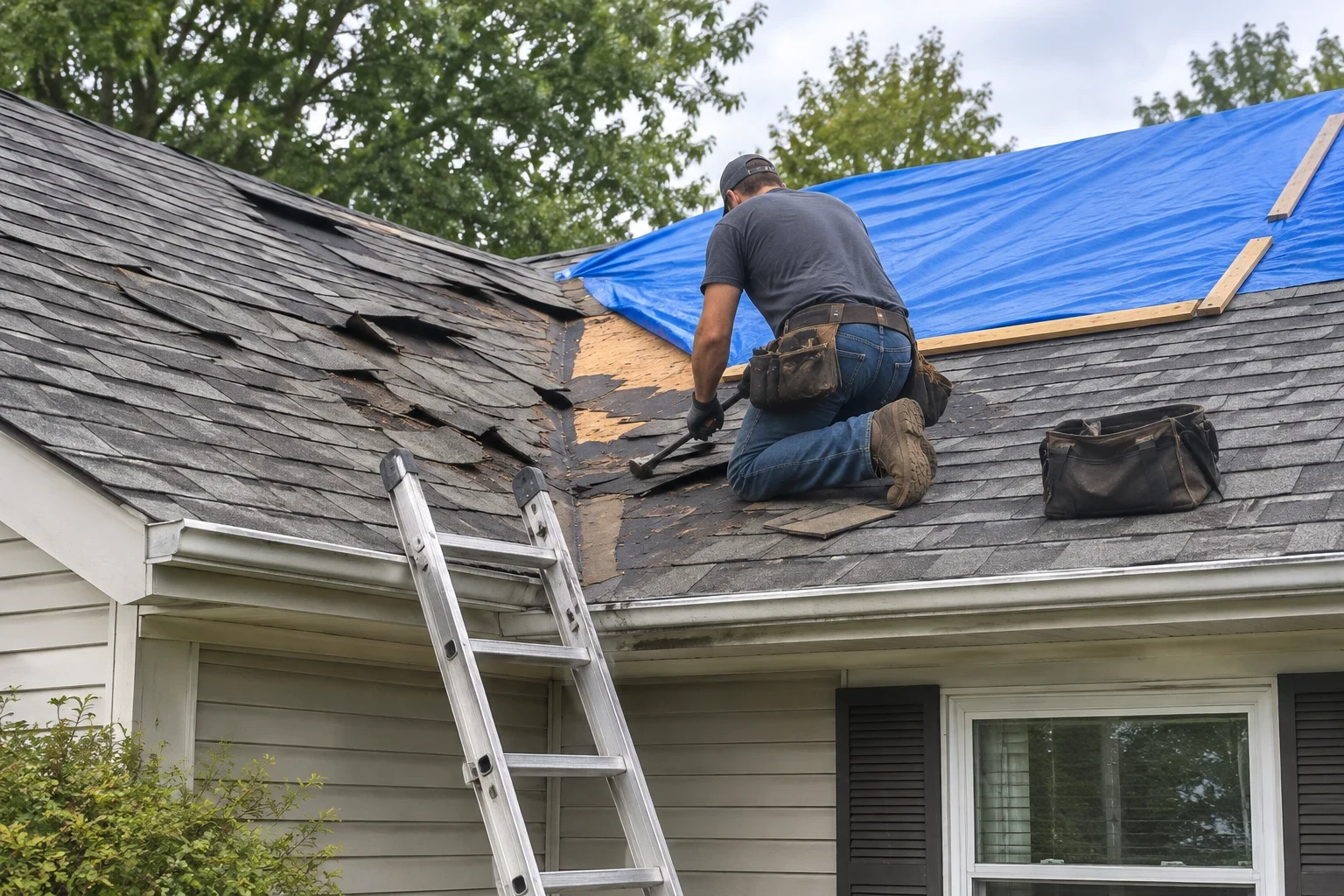
After hail or high wind, we get on your roof and find what the storm actually damaged: bruised shingles, broken seal strips, dented vents, lifted flashing. You get photos of every problem and a clear plan, whether that is a small repair or an insurance claim.
What Storm Damage Repair Really Involves
Storm damage repair starts with finding what hail and wind did to your roof, not guessing from the date of the storm. Hail bruises the fiberglass mat inside a shingle and knocks its granules loose, which exposes the asphalt to UV and shortens its life. Wind breaks the sealant strip under a tab and creases it at the nail line, so the next gust lifts it further. Neither one always shows from the driveway.
We begin with a free inspection on the roof itself. We chalk-mark hail hits, check soft metals like box vents, ridge vents and gutters for dents that confirm hail size, and gently lift tabs to test whether the seal has let go. Then you get photos of each finding and a direct answer: a targeted repair, a section replaced, or damage wide enough that a claim for full replacement makes sense.
Some roofs come through a storm with nothing more than cosmetic marks. When that is the case, we tell you so.
What the Work Includes
Hail and wind assessment
We inspect every slope, not just the one facing the storm. Hail hits are checked for soft spots and fractured mats, and wind damage is traced along the seal lines and ridge cap.
Photo documentation
Each damaged area is marked and photographed with a reference so it can be found again. Those photos go to you and can support a claim if you decide to file one.
Help with insurance claims
We work with homeowners and insurance companies on storm damage claims. We can be on the roof when the adjuster inspects and point out what we found, though the coverage decision stays with your insurer.
Shingle and flashing repair
Creased or missing shingles are replaced and hand-sealed, and lifted step or counter flashing is refastened or replaced so water cannot run behind it.
Decking and underlayment check
Where shingles have been torn off, we look at the underlayment and the decking beneath. Wet or delaminated plywood gets replaced before new shingles go over it.
Vents, boots and gutters
Dented vent caps, cracked pipe boots and crushed gutters are repaired or replaced as part of the same visit, since each one can let water in or send it the wrong way.
Signs Your Roof Took Storm Damage
- Granules in the gutters
- A heavy layer of dark, sand-like granules at the downspout outlets after a hailstorm usually means shingles lost their surface coating.
- Shingles in the yard
- Whole tabs or pieces of ridge cap on the ground mean the wind found a weak seal. The spot they came from is now open to rain.
- Dents on metal parts
- Round dents on vent caps, gutters or downspouts show the hail was large enough to bruise shingles too, even when the shingles look normal from below.
- Creased or flapping tabs
- A horizontal line across a tab means it bent back in the wind and the mat cracked. It will not lie flat or reseal on its own.
- New stains on the ceiling
- A water spot that shows up days after a storm often traces to lifted flashing or a cracked pipe boot rather than the shingles themselves.
How a Storm Repair Runs
- 1
Free roof inspection
We go up on every slope, mark and photograph each hail hit and loose tab, and look in the attic for water coming through. Any opening that is actively leaking gets a fastened tarp over it until the repair is scheduled.
- 2
Photo report and estimate
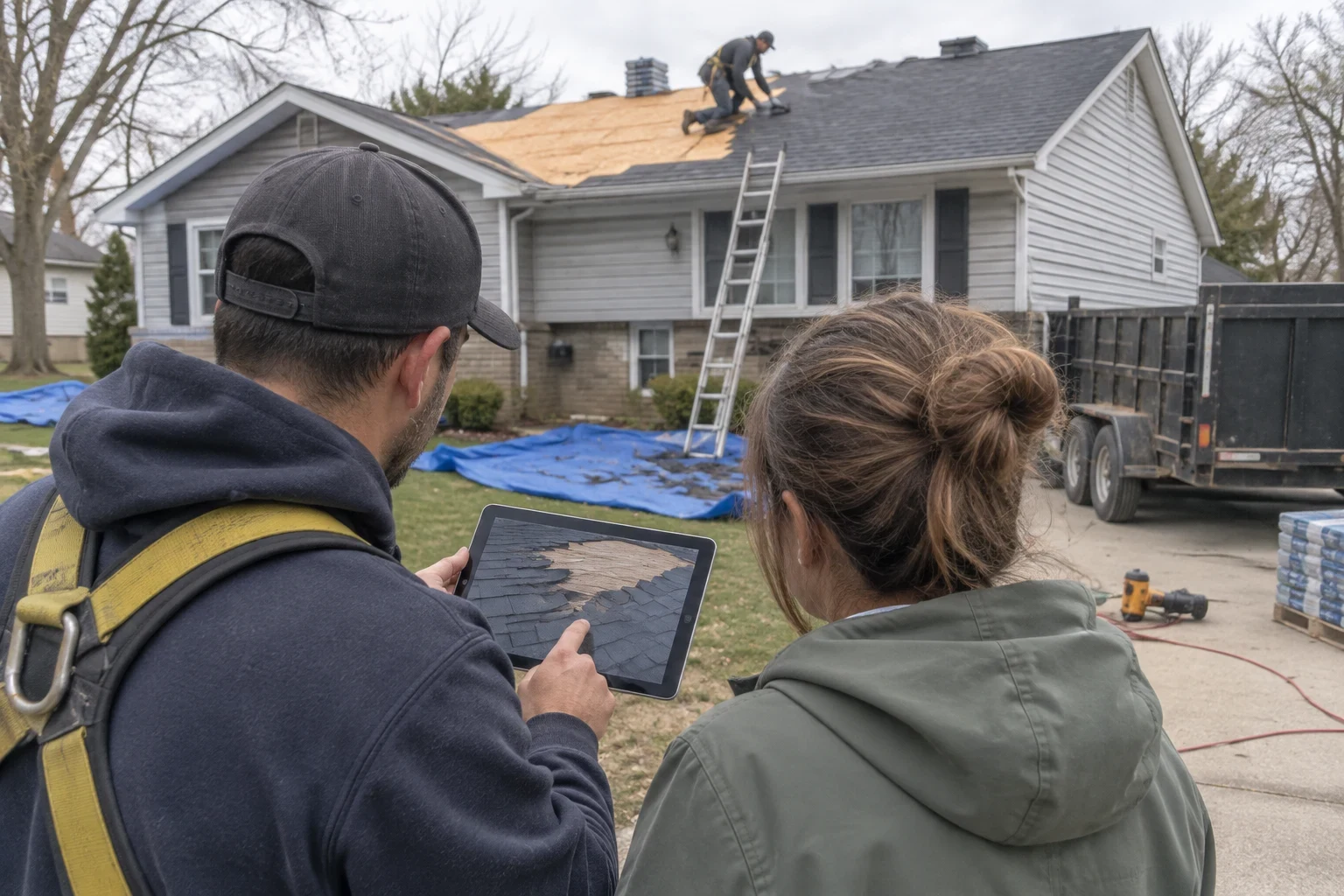
We hand you the marked photos along with an itemized estimate that keeps storm-caused damage apart from ordinary aging. When a claim looks justified, we walk you through our reasoning and the details an adjuster typically checks.
- 3
Adjuster visit if you file
If you open a claim, we can be on the roof with the adjuster, go over each marked area, and share our photos. Anything left out of their report gets documented so you can ask your insurer to take another look.
- 4
Repair and cleanup
Landscaping is covered before work starts, then the repairs are made. At the end we pull magnetic sweepers over the lawn and driveway to collect nails, and you receive photos of the completed work.
What Moves the Cost of Storm Repair
The price comes from what the inspection finds, so we do not quote before we have been on the roof. When insurance is involved, your deductible and policy terms shape what you pay out of pocket. Financing is available for work that falls outside a claim.
- How much of the roof was hit
- A handful of creased tabs is a small repair. Hail bruising spread across several slopes usually points to replacing sections or the full roof.
- Shingle matching
- If your shingle line has been discontinued, a clean repair may need more area replaced so color and profile line up.
- Condition underneath
- Wet decking or torn underlayment adds material and labor that only shows once damaged shingles are removed.
- Pitch and access
- Steep slopes need extra safety setup, and tight lots or tall homes take longer to stage materials on.
Common Questions About Storm Repairs
- Should the roof be inspected before I open an insurance claim?
- Usually, yes. If the inspection turns up only cosmetic marks or normal wear, you avoid a claim on your record that goes nowhere. If the damage is real, you call your insurer with dated photos of each problem already in hand.
- How long do I have to file a hail or wind claim?
- That limit comes from your policy, and it varies between insurers. Check your declarations page or ask your agent for the exact window. Getting the roof inspected soon after the storm also makes it easier to tie the damage to that particular event.
- Can you replace only the shingles the storm damaged?
- Often we can. A few wind-creased or torn tabs are a routine repair. When hail bruising runs across several slopes, or your shingle is no longer made and cannot be matched, a section or full replacement may be the sounder fix, and the photos will show you the reason.
- Will you deal with the adjuster for me?
- We work with homeowners and insurance companies on storm damage claims. In practice that means meeting the adjuster on the roof and sharing our photos and notes. We are not your adjuster and we do not negotiate your settlement, but we make sure every area we marked gets examined.
- My gutters are dented. Does that mean the roof is damaged?
- Not always, but it is worth checking. Dents in aluminum gutters and vent caps tell us the size of the hail, and hail large enough to dent metal can fracture the fiberglass mat in a shingle. For repairing the gutters themselves, see our Gutters page.
Have the Roof Checked Before You File
We will find what the storm actually did, photograph it, and tell you whether it needs a repair, a claim or nothing at all.