ServicesTPO Roofing
TPO Roofing in Beech Grove
Shingles need slope to work. On a flat porch, a low addition or a garage roof, we install TPO, a single-ply membrane with heat-welded seams. Before we quote it, we find where the water is actually getting in and why.
What TPO is and when it fits your home
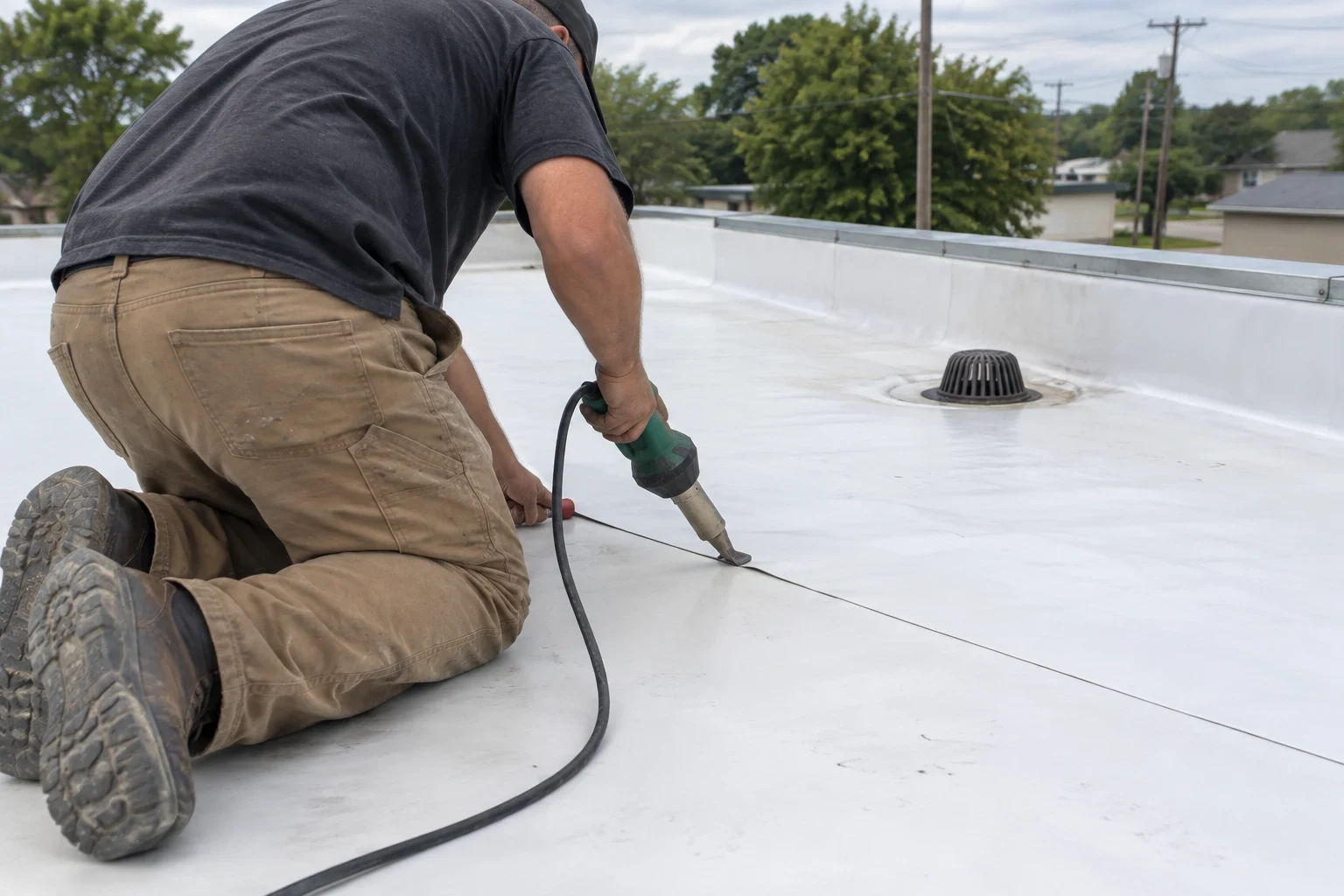
TPO (thermoplastic polyolefin) is a white membrane that comes in wide rolls. Where two sheets overlap, we fuse them with a hot-air welder so the seam becomes one continuous piece of plastic. There is no adhesive or tape at the seam to dry out and let go, which is why TPO holds up on roofs where water sits longer than it would on a pitched roof.
It is the right call for roof sections below about 2:12 pitch: enclosed porches, rear additions, attached garages and the flat middle of some mid-century homes. Shingles on those slopes let wind-driven rain and melting snow back up under the tabs. Rolled roofing and old tar-and-gravel fail there too, usually at the seams and edges first.
Not every leak under a flat section means the membrane is the problem. A failed wall flashing, a clogged scupper or a cracked pipe boot can drip in the same spot. We sort that out first, so you are not paying for a new roof when a flashing repair would do.
What a TPO installation includes
Tear-off and deck check
We remove the old covering down to the wood deck and replace soft or rotted sheathing. Laying new membrane over a damp deck traps moisture and shortens its life.
Insulation board and drainage
Polyiso board goes down under the membrane. Where water has been ponding, we use tapered board to build in slope toward the edge, gutter or drain.
Heat-welded membrane
We install the membrane fully adhered or mechanically fastened, depending on the deck and the roof size, and weld every seam. Each seam is probed after it cools to confirm a full bond.
Flashing at walls and transitions
Where the flat section meets a wall or a shingled slope, we turn the membrane up and secure it with a termination bar and counterflashing. Most low-slope leaks start at these joints, so they get the most attention.
Penetrations and edge metal
Vent pipes, exhaust stacks and skylight curbs get prefabricated TPO boots or welded flashings. New drip edge and edge metal finish the perimeter so wind cannot get under the sheet.
Signs a flat section needs TPO
- Ponding that outlasts the storm
- Puddles that linger 48 hours or more mean the roof has sagged or the drainage path is blocked. Once temperatures drop, that standing water freezes and pries at every seam and crack.
- Stains below the low section
- A brown ring on the porch ceiling or garage drywall means water has been getting through for a while, often soaking the insulation before it shows.
- Cracked or blistered rolled roofing
- Rolled roofing and modified bitumen blister as trapped moisture expands in the sun. Once the surface cracks, each freeze-thaw cycle opens it wider.
- Seams or edges lifting
- Lapped seams that you can lift by hand, or edges curling away from the drip edge, let wind push rain straight under the covering.
- A soft spot when you step on it
- Give underfoot usually means wet insulation or a rotting deck. That changes the scope, and we would rather find it at the inspection than on install day.
How the job runs
- 1
Inspection and cause
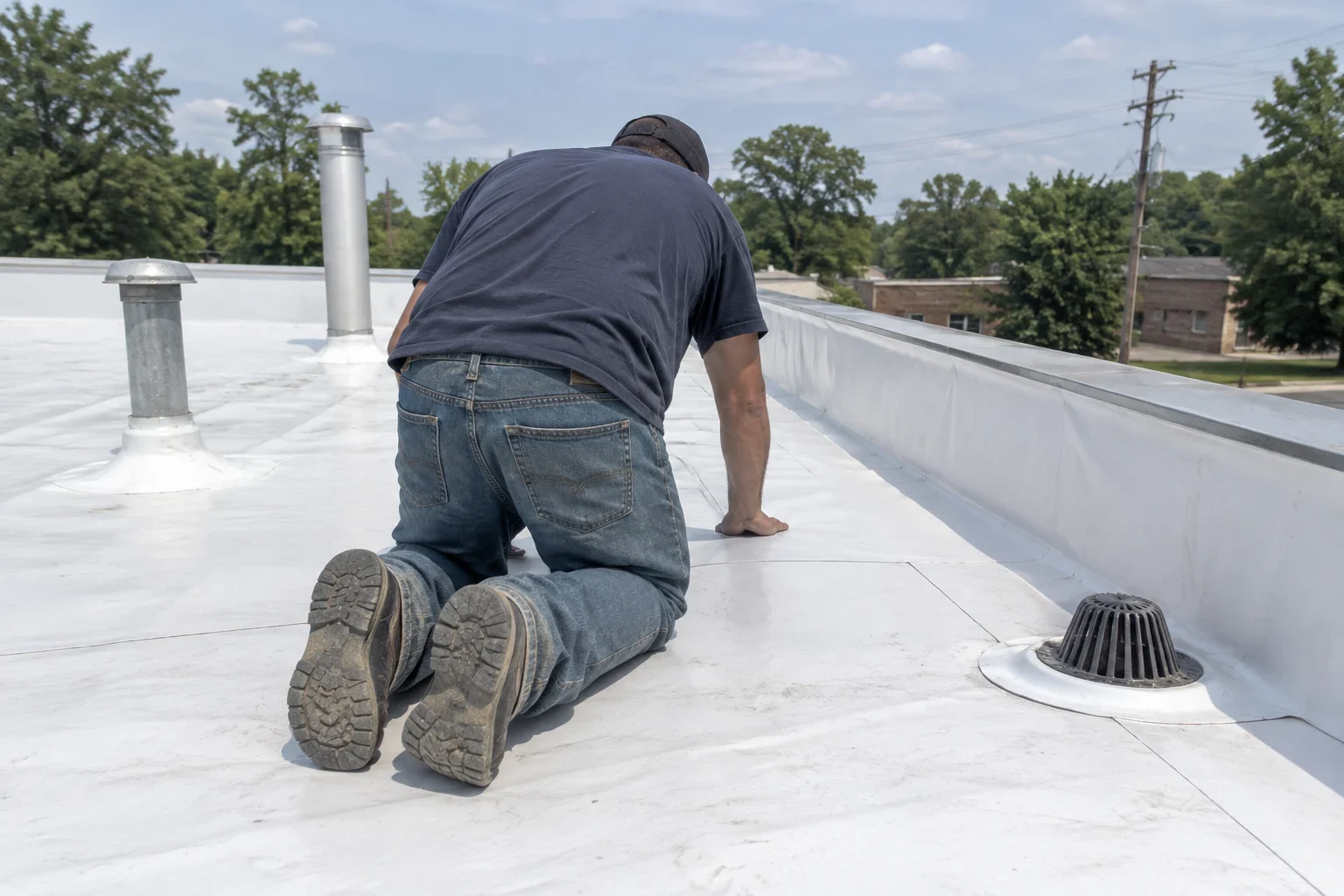
We walk the roof, probe seams and flashings, check the deck for soft areas and look at the ceiling below. You get photos and a plain explanation of where the water is entering and why.
- 2
Written estimate
The estimate lists tear-off, deck repair, insulation, membrane, flashing and edge metal as separate lines. If repair makes more sense than replacement, we say so.
- 3
Tear-off and prep
We protect landscaping and the shingled slopes next to the work area, strip the old roof and fix the deck. Most residential flat sections are opened and dried in the same day.
- 4
Membrane, welds and flashing
Insulation, membrane and flashings go down, then every seam is welded and probed. We water-test suspect transitions when it helps confirm the fix.
- 5
Cleanup and walkthrough
We haul off debris, run a magnet over the yard for nails and show you the finished roof, including where the water now drains.
What moves the price of a TPO roof
Two flat roofs of the same size can price very differently. Most of the difference is in what sits under the old covering and how many details the roof has. We quote after we have opened up the question of condition, not before, and we offer financing.
- Size and shape
- Square footage sets the material, but corners, wall lines and odd shapes add welding and flashing time.
- Deck and insulation condition
- Wet insulation has to come out and rotted sheathing has to be replaced. Years of slow leaks can turn a simple overlay-sized job into a full rebuild.
- Drainage corrections
- A roof that ponds needs tapered insulation or a new scupper or gutter connection. That adds material but fixes the reason the last roof failed.
- Penetrations and tie-ins
- Each pipe, vent and skylight needs its own flashing. Tying the membrane into an existing shingled slope takes careful layering at the joint.
- Membrane thickness and access
- Thicker membrane costs more and tolerates foot traffic better. Tight access over a porch or between buildings slows tear-off and loading.
TPO roofing questions
- Can you put shingles on my porch roof instead?
- Only if it has enough pitch. Shingles need at least 2:12 with special underlayment, and most porch and garage roofs are flatter than that. On those slopes water backs up under the shingle tabs, so a membrane is the more reliable choice. We measure the pitch at the inspection and tell you which option will actually shed water.
- Can TPO go over my existing flat roof?
- Sometimes, but we rarely recommend it on homes. Covering an old roof hides any wet insulation or soft decking, and that moisture keeps rotting the wood under the new membrane. A tear-off lets us see and fix the deck.
- How long does a TPO install take?
- Most residential flat sections take one to two days. Deck repairs or drainage changes can add time, and we will tell you that at the estimate rather than on the job.
- Will the white membrane stay white?
- It will collect some dirt and pollen over time, which is normal. It still reflects much more sunlight than a dark roll roofing, which helps keep the room below cooler in summer. A gentle rinse brings back most of the color.
- My TPO roof is leaking. Does it need replacing?
- Not necessarily. Many TPO leaks come from a single failed seam, a split pipe boot or a loose termination bar, and those can be welded or reflashed. We probe the seams and check the details first, and we only recommend replacement when the membrane itself is worn out or the insulation under it is soaked.
Find out what your flat roof really needs
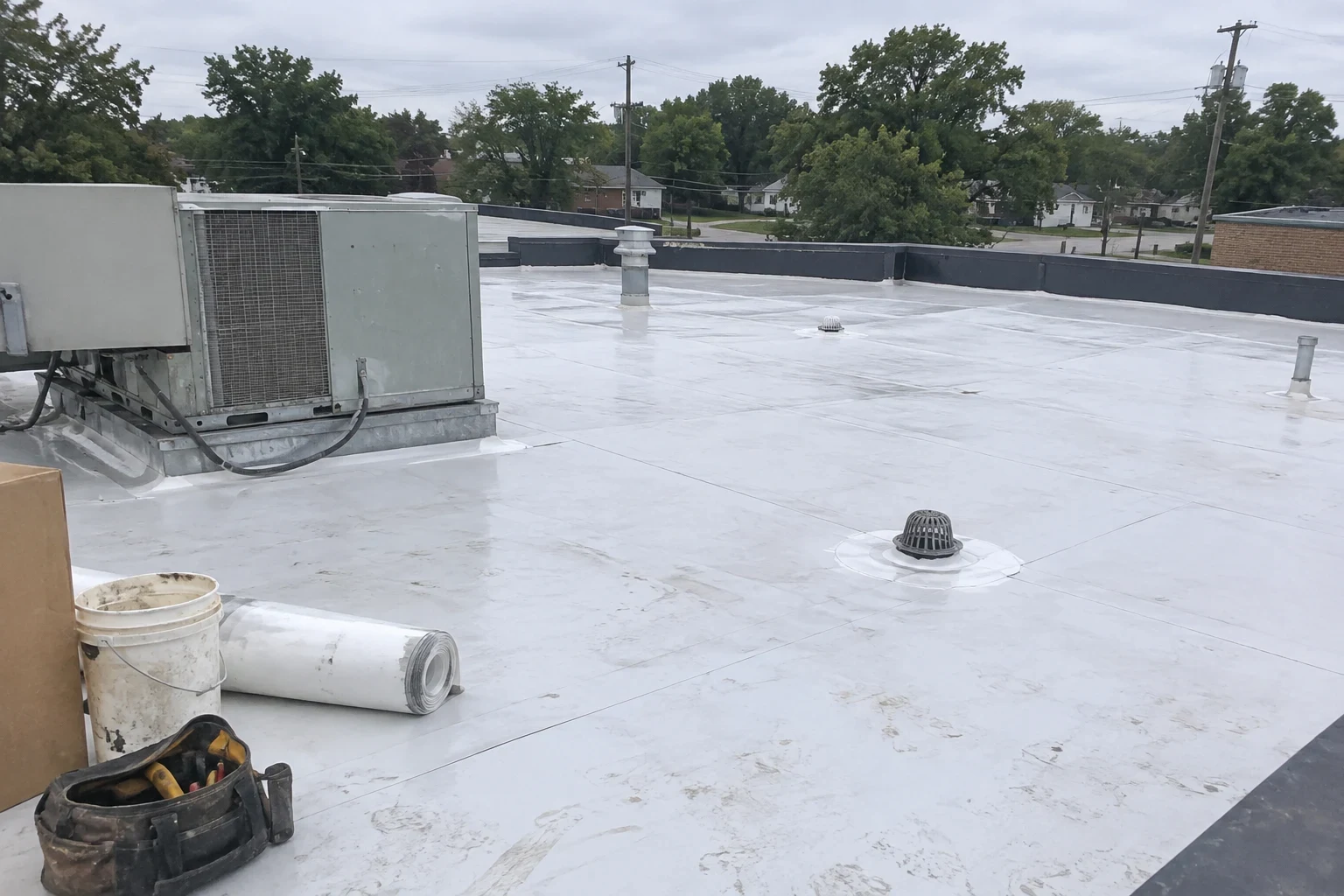
We will check the seams, flashings and deck, show you photos of what we find, and explain whether it calls for a repair or new TPO.