ServicesRoof Repair
Roof Repair in Beech Grove
A stain on the ceiling rarely sits under the spot that failed. Water runs along rafters and decking first. We trace the leak back to the actual flashing, boot or shingle that let it in, show you photos, and repair that part so it stays dry.
Repair Starts With Finding the Failure
A handful of parts cause most roof leaks: neoprene pipe boots that crack after years of sun, step flashing that was nailed through or left unsealed, worn valleys, and shingles creased or lifted by wind. Smearing caulk over the stain or swapping a random patch of shingles only treats what you can see. Water keeps finding its way in, and the decking below stays wet.
We work from both sides, starting in the attic and then on the roof surface, following water trails, rusty nail tips and darkened sheathing back to where the water enters. With the cause confirmed, the fix is usually small and targeted. When the shingles are too worn for a repair to hold, we say so directly, show you the reasons in photos, and our Roof Replacement page explains what that option involves.
What Our Roof Repair Covers
Leak tracing
We inspect from the attic side and the roof side, checking sheathing, insulation and fasteners for the path water took. You get photos of what we found and where.
Flashing repair
Chimney counterflashing, step flashing along walls, and skylight flashing are common failure points. We remove and reset or replace the metal rather than smearing sealant over the joint, because sealant dries out and cracks within a few seasons.
Pipe boots and roof vents
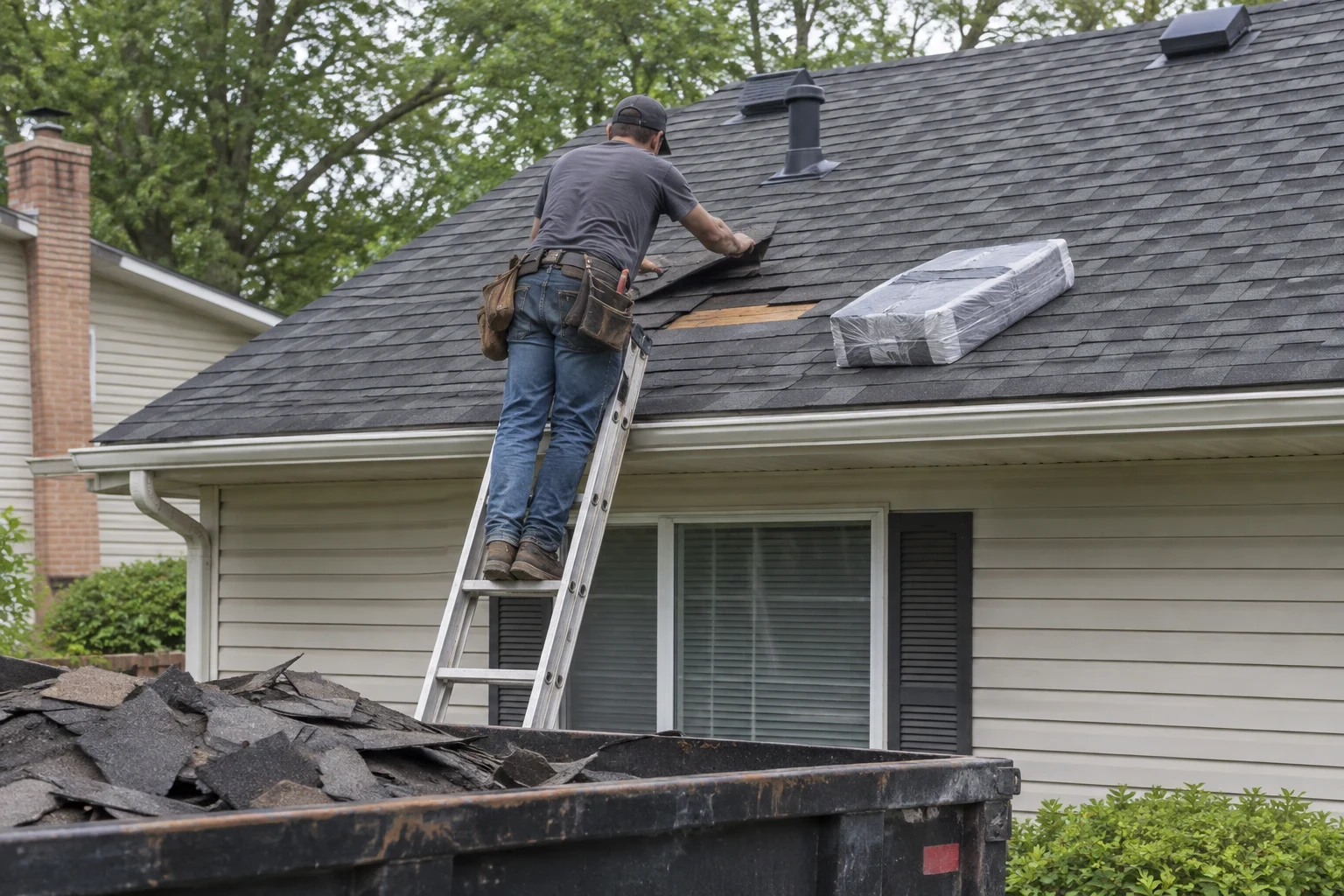
Neoprene collars on plumbing vents split from UV exposure and freeze-thaw cycles. We replace the boot and the surrounding shingles so the new collar laps correctly.
Shingle and valley repair
Missing, creased or lifted shingles are replaced and sealed down, matched as closely as available products allow. Worn valleys get new underlayment and shingles or metal so runoff stays channeled.
Soft or rotted decking
If water has reached the plywood or plank sheathing, we cut out the damaged section and install new decking before re-roofing that area. Shingles over soft wood will not hold nails.
Warning Signs That Point to a Repair
- Stains on a ceiling or wall
- A tan or brown outline on drywall, or paint that bubbles and peels, means water has been getting in for a while, not just during the last storm. The spot where it enters the roof is often several feet uphill from the mark inside.
- Granules in the gutters
- A thick layer of grit in the gutters after a rain means shingles are losing their protective coating. Once the asphalt is exposed, summer heat breaks it down fast.
- Lifted or missing shingles
- Wind can pop the adhesive strip loose, and a tab that lifts once is easy for the next storm to tear away, leaving nail lines open to water.
- Damp attic insulation
- Matted or wet insulation, rust on the nail points, or light coming through the boards all deserve a look before the sheathing starts to rot.
- Leaks around the chimney
- Drips or marks near a chimney or a sidewall almost always trace to flashing that has failed, not to the shingles.
- Ice dams along the eaves
- A ridge of ice at the roof edge in winter backs meltwater up under the shingles. It often points to an attic heat or ventilation issue, which we check while we are there.
How a Roof Repair Job Runs
- 1
Free inspection
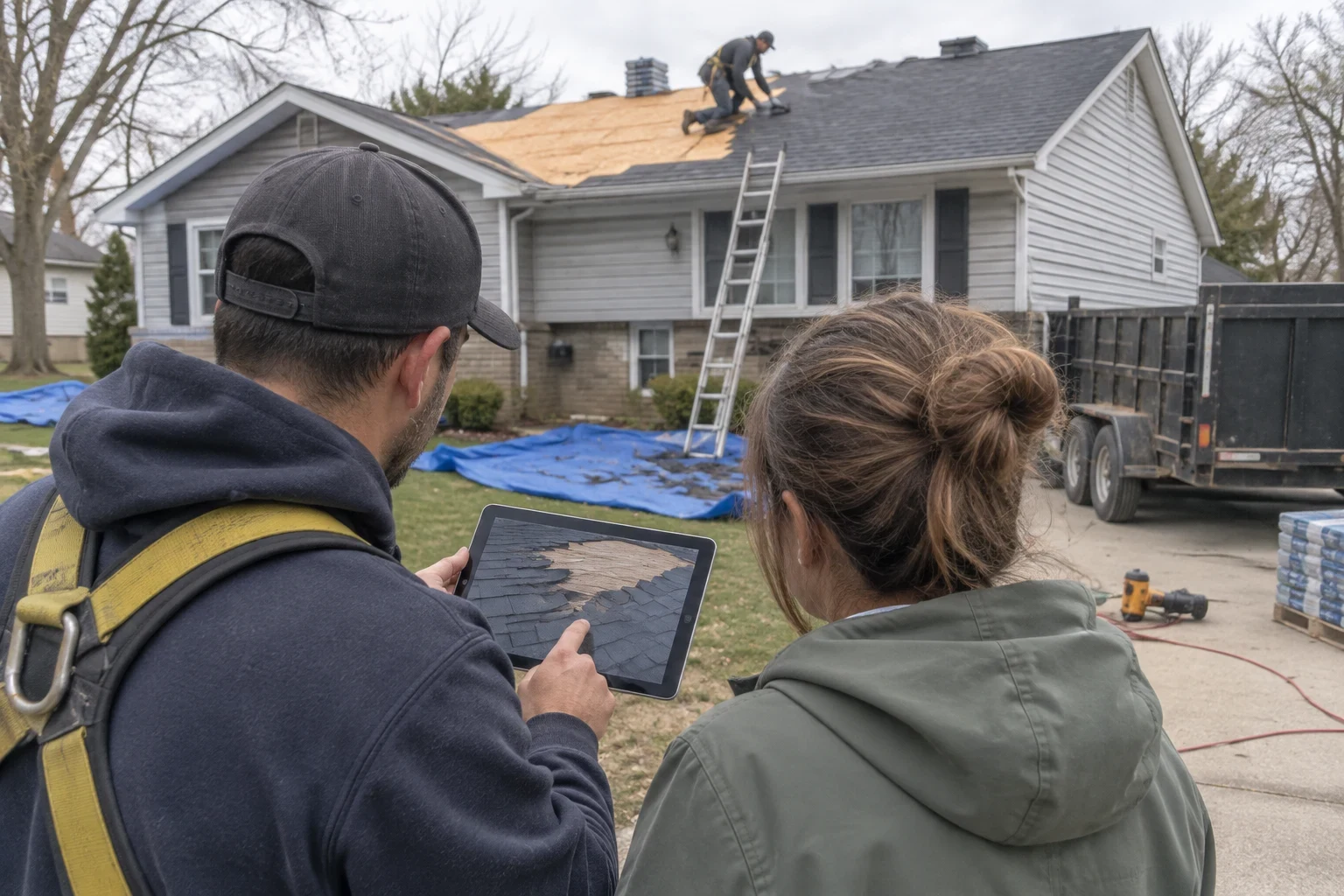
You call, we set a time, and we inspect the attic and the roof. We photograph the entry point and any damage around it.
- 2
A clear answer and written estimate
We walk you through the photos, explain what failed and why, and give you a line-item estimate. If repair will not hold, we say so and explain the reason.
- 3
Repair day
We protect landscaping and siding below the work area, remove the failed materials, and inspect the decking once it is exposed. Any rot gets replaced, then underlayment, flashing and shingles go back in the correct lapping order.
- 4
Check and cleanup
We confirm the repaired area is sealed and shedding water properly, collect old material, and run a magnet across the yard and driveway for stray nails.
What Changes the Price of a Roof Repair
We inspect before we quote because the price follows the failed part and the work needed to correct it. Your written estimate breaks the job into line items, so you see each piece of labor and material before we start. Financing is available if it helps you get the work done now.
- What we find under the shingles
- Soaked underlayment or rotted sheathing means more material and more hours. That only shows once the area is opened, so we photograph it and talk with you before adding any work.
- Which part failed
- Swapping one cracked pipe boot is a short job. Rebuilding the flashing around a chimney or relaying a whole valley takes longer and uses more metal, underlayment and shingles.
- Pitch, height and access
- A steep slope, a second-story eave or a cramped spot between dormers calls for extra safety gear and slower, more careful work.
- Finding a shingle match
- When a shingle line is discontinued or the style is older, sourcing a close color and profile match can take extra time.
Roof Repair Questions
- Is a repair enough, or do I need a new roof?
- We decide that from the age of your shingles and how much of the roof the problem has reached. A single cracked boot or one bad flashing detail on an otherwise sound roof is a repair job. When most slopes show brittle, curling shingles that are dropping granules, patching one area only sends the next leak to a different spot, and we show you that in photos.
- Can you match my existing shingles?
- We look for the same brand, color and profile, as close as current products allow. Older shingles weather and fade, so new pieces can stand out at first and blend in over time. If an exact match is not on the market, we tell you before the work starts.
- Will you just caulk the leak?
- No, unless sealant is the right detail for that particular spot. Most leaks trace back to flashing or shingles that were lapped or fastened wrong, and caulk on top of that cracks and lets water in again within a few seasons. We correct the part that failed.
- Can you repair a roof in winter?
- Yes, many repairs go fine in cold weather. The factory sealant strips on shingles need warmth to bond, so in the colder months we hand-seal each new shingle to keep it from lifting in the wind.
- Is my leak covered by insurance?
- It may be if wind or hail caused it. We work with homeowners and insurance companies on storm damage claims and can document the damage we find with photos. Our Storm Damage Repair page walks through how that works.
Find Out What Is Really Causing Your Leak
We will inspect the attic and roof, show you the failed part in photos, and explain the repair before any work starts.