ServicesRoof Replacement
Roof Replacement in Beech Grove, IN
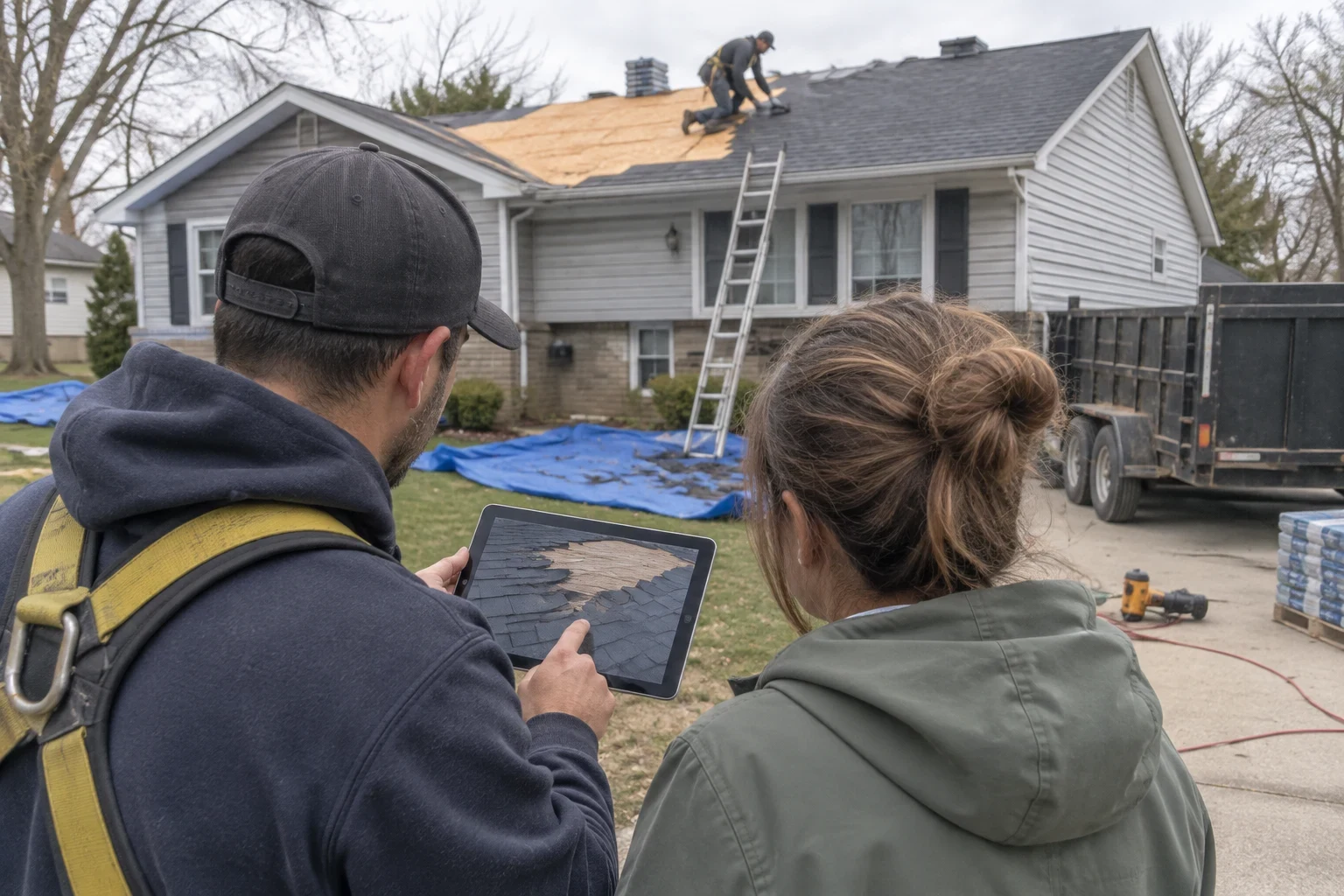
A new roof is a big decision, so we start by confirming you need one. We inspect the decking, flashing and attic ventilation, show you photos of what we found, and recommend replacement only when a repair would not hold.
When replacement is the right answer
Plenty of roofs we look at do not need to come off. A leak at a chimney or a few torn tabs is a repair job, and we will tell you so. Replacement makes sense when the roof is failing as a whole: shingles that have lost granules on every slope, decking that has gone soft, or a second layer of shingles trapping heat and moisture against the deck.
We find the actual cause before anyone writes a number down. A roof that wore out early because the attic could not vent will wear out early again if we only swap the shingles. That is why we check intake and exhaust ventilation, the plywood or plank sheathing, and every pipe, vent and chimney before the estimate is written.
Freeze-thaw cycles and ice dams in Indiana winters push water into any weak spot, so the parts you will never see after the job, like ice and water shield at the eaves and valleys, get as much care as the shingles on top.
What a full replacement includes
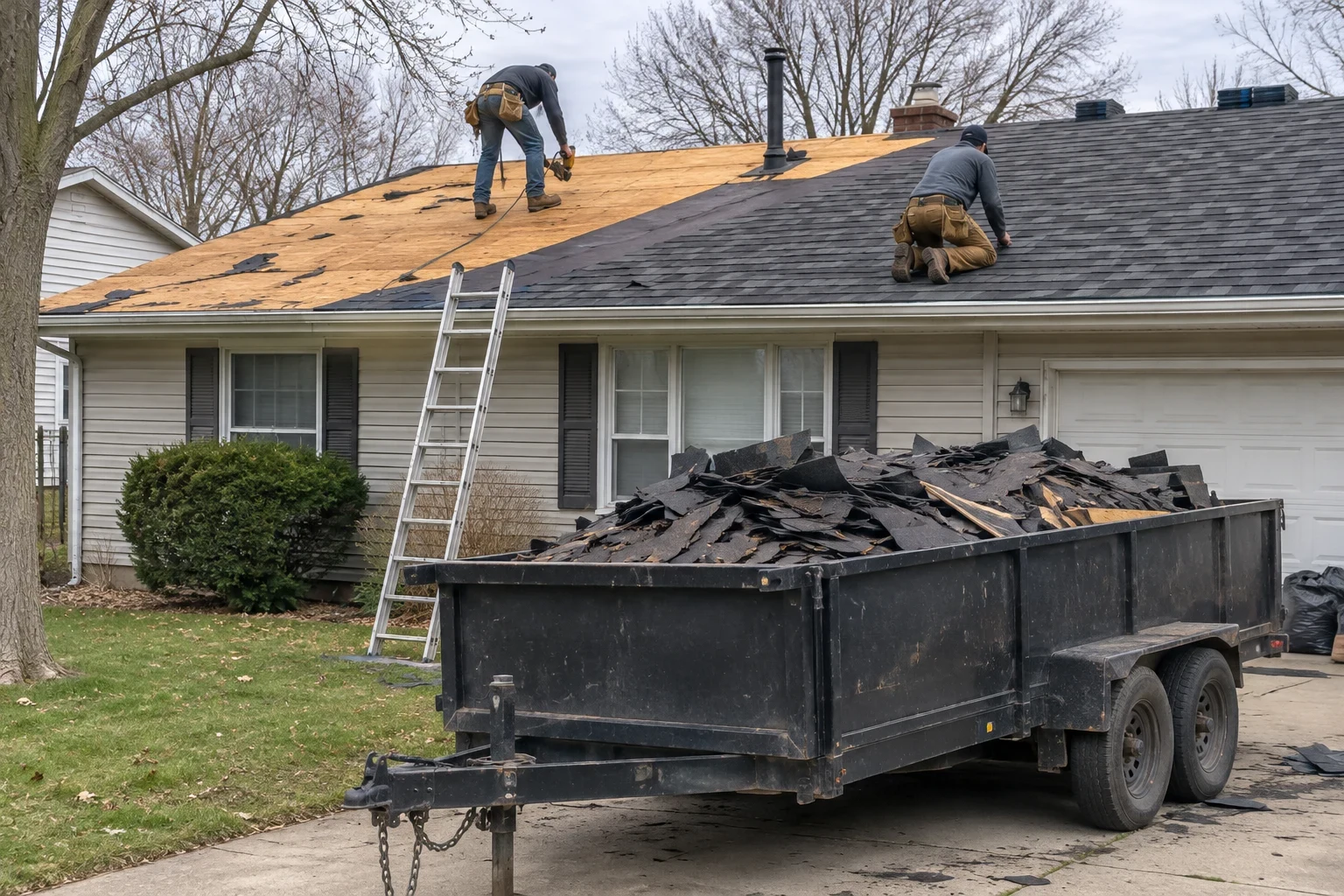
- Everything off, down to bare deck
- Every old layer comes off until only the sheathing is left. We do not shingle over an existing roof, because that hides rotted wood and cuts years off the new shingles.
- Decking repair
- With the deck exposed, we walk every sheet and swap out any that are soft, delaminated or rotted. Those sections are photographed and listed separately on your estimate.
- Ice and water shield plus underlayment
- A self-adhering membrane runs along the eaves, through the valleys and around each penetration, the spots where ice dams and wind-driven rain find their way in. The rest of the sheathing is covered with synthetic underlayment.
- New metal at every edge and wall
- Drip edge goes on along the eaves and rakes, with new step flashing at sidewalls, new chimney counterflashing and new pipe boots. Reusing dented or rusted flashing from the old roof is the most common reason a new roof leaks.
- Balanced ventilation
- We size soffit intake to match the ridge or roof vents so warm, damp air can escape the attic. Keeping the attic dry protects the deck and keeps summer heat from baking the shingles from underneath.
- Property protection and cleanup
- Tarps go over plantings and the ground below the work. At the end of the job the old material is hauled away and a magnetic sweeper is rolled over the yard and driveway to pick up stray nails.
Signs your roof needs replacing, not patching
Granules piling up in gutters
Shingles shed some granules all their lives. Heavy buildup and bald, dark patches on the slopes mean the asphalt is exposed to UV and will start cracking.
Curling or cupping on every slope
One curled shingle is a repair. When edges lift or cup across the whole roof, the shingles have dried out and wind will start tearing them off.
A sagging roofline
A dip between rafters points to wet or broken decking, sometimes framing. New shingles over it change nothing, so the deck has to be opened up.
Leaks that keep moving
If each repair stops one leak and another shows up a few feet away, the underlayment beneath is likely failing across the roof.
Daylight or damp in the attic
Light through the boards, dark stains on the sheathing or frost on the nails in winter tell us water and air are getting through, or that the attic cannot vent.
What sets the price of your new roof
We will not put a number on a replacement until we have walked the roof and looked in the attic, because the items that swing the price most are only visible up close. Each one gets its own line on your written estimate. If we uncover something new once the old roof is off, we photograph it and talk it through with you before any extra work starts. Financing is available if you would rather spread the cost of the roof over time.
Roof area and pitch
A bigger roof takes more bundles, more underlayment and more crew hours. On a steep pitch the crew works from roof jacks and harness lines, which slows every course of shingles.
How many layers come off
Stripping two or three layers instead of one adds hours to the tear-off and raises the tonnage that goes to the dumpster.
Condition of the deck
Soft, rotted or delaminated sheathing gets replaced before any membrane goes down. You see a sheet count and the photos that justify it.
Shingle or metal
Architectural asphalt shingles and standing seam metal sit at different points on cost and service life. The Shingle Roofing and Metal Roofing pages lay out how they compare.
Chimneys, skylights and valleys
Every penetration and valley takes its own flashing detail. A plain gable with two pipe vents is quicker to finish than a roof broken up by dormers, skylights and more than one chimney.
How a replacement job runs
- 1
Free inspection and diagnosis
We go up on the roof and into the attic, measure every slope and photograph what we find. You get a straight answer on repair versus replacement, with the reasons.
- 2
Written estimate and permit
The estimate lists materials, decking, flashing and ventilation work line by line. We pull the permit where your city or county requires one.
- 3
Tear-off and dry-in
We aim to tear off and dry in each section the same day, so the deck is not left open to weather. When the forecast is uncertain, we work one slope at a time.
- 4
Install and final walk-through
Shingles, flashing, vents and ridge cap go on. We take pictures of the bare sheathing and the membrane layers while they are still exposed and go through them with you at the end, then clean the site and answer your questions.
Roof replacement questions
How do I know I need a new roof and not a repair?
That call gets made on the roof, not on the phone. When the damage sits in one spot and the shingles and deck around it are still sound, we recommend a repair. When the shingles are worn across every slope or the deck has gone soft in several places, a patch only delays the replacement. We show you the photos that led to our answer.
How long does a roof replacement take?
Most single-family homes take one to two days. Bigger roofs, steep pitches, extra layers or a lot of new decking can stretch that. Rain often pushes the schedule, and we will not open up a roof with bad weather on the way.
Can the new shingles go right over the old roof?
That is not how we install a roof. Shingling over an existing layer covers up soft decking and tired flashing, traps heat under the new shingles and puts more weight on the rafters. Taking everything down to the deck is the only way we can see the problems and correct them.
Will my insurance pay for a new roof?
If hail or wind caused the damage, your policy may cover part or all of the replacement. We work with homeowners and insurance companies on storm damage claims, documenting what we find with photos and measurements. The coverage decision belongs to your adjuster. Our Storm Damage Repair page walks through how a claim usually goes.
Do I need to be home during the work?
You do not need to stay all day. We like to walk the roof with you at the start and again when we finish. Tear-off is noisy and sends some vibration through the framing, so move vehicles to the street the night before and take down pictures and mirrors hanging on upstairs walls.
Find out what your roof actually needs
We will inspect the roof and attic, show you what we find and give you a written answer on repair or replacement. The inspection costs you nothing.